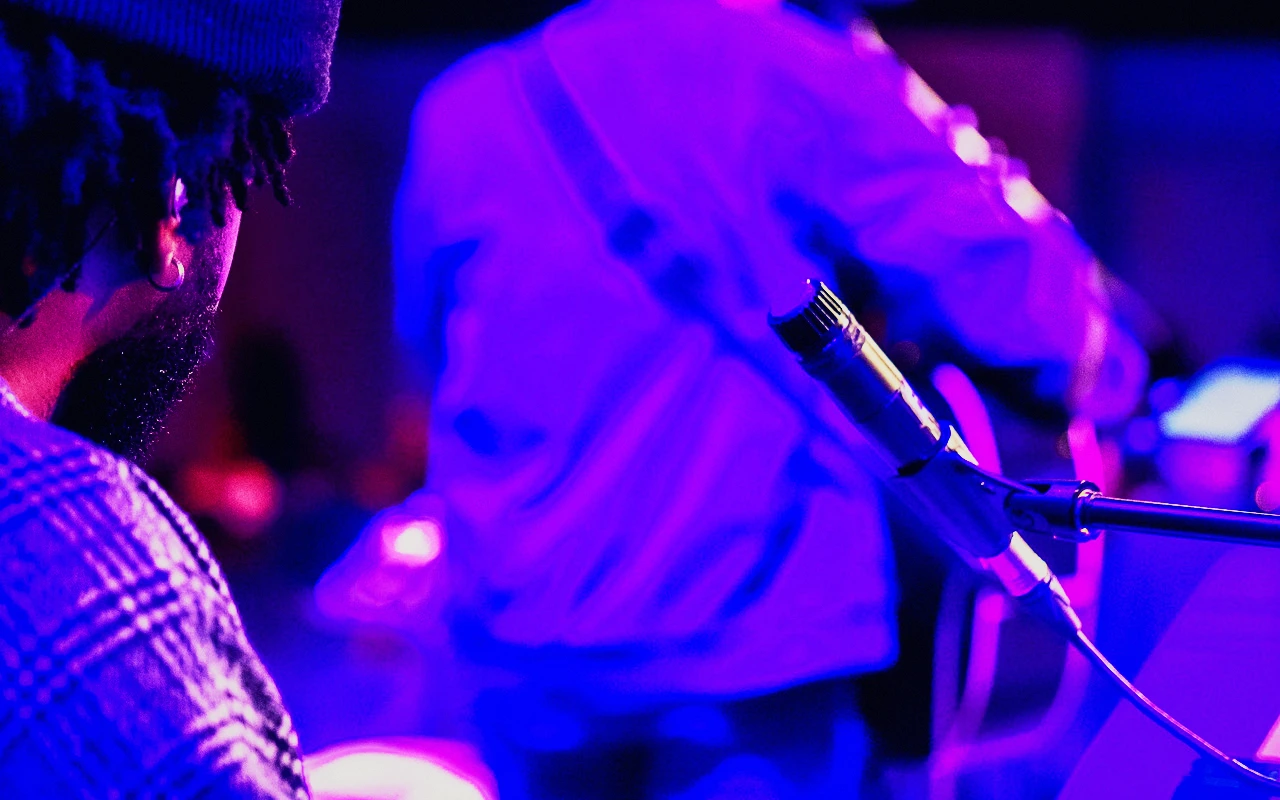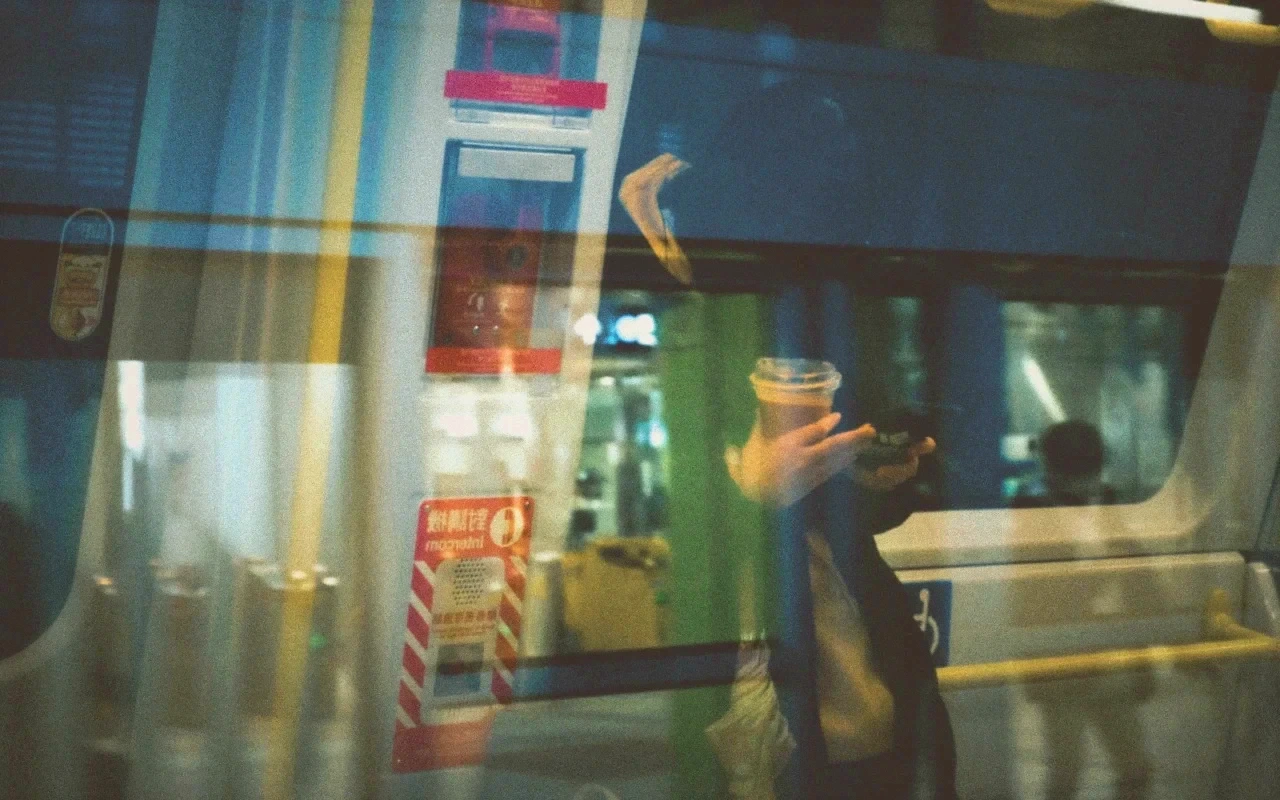
Bleach Bypass Print
Silver-retention print finish with compressed color, dense blacks, forceful midtone separation, and a hard luminous print texture.
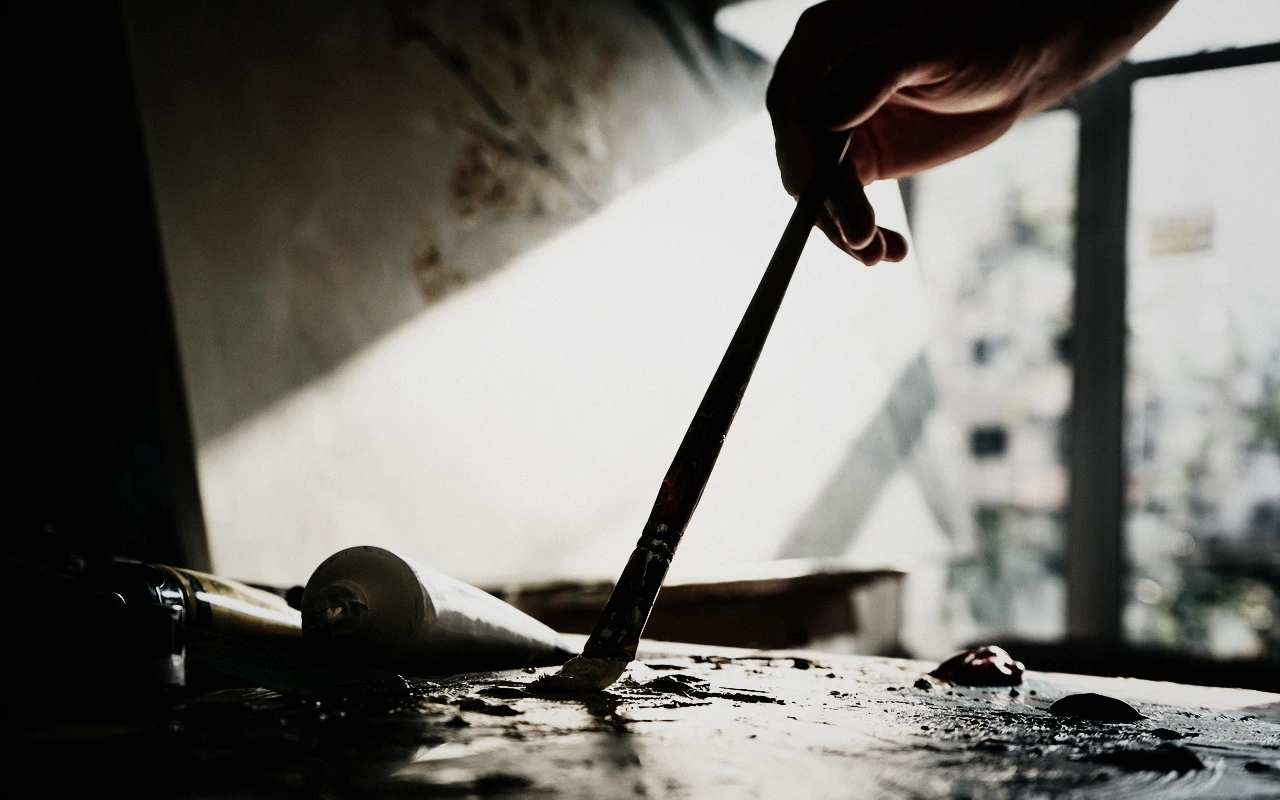
Visual character
Silver-retention density with restrained color
Best for
- Dramatic print finishing
- Industrial and period imagery
- Restrained-color action
Lighting conditions
- Balanced cinema masters
- Low-key scenes
- Controlled skin-tone photography
Color character
The CineLook Bleach Bypass Print transform treats color as material to compress rather than a property to correct. Saturation falls 42 points, so most hues settle into a narrow, dusty register, while Vibrance rises 4 points to keep skin and whatever chroma remains from going gray with everything else. Contrast climbs 27 points and both ends tighten: Highlights -10, Shadows -22, for dense blacks and a print that will not open up. Detail survives, but only where light puts it; broad flat shade collapses into weight. Midtone separation comes from contrast, not hue. The curve states the shape plainly: shadows down 0.072, midtones held at 0.005, highlights up 0.088. That lift is contained by the -10 Highlight control and Highlight Rolloff 25, which keep the top end inside printable density instead of bare white. Exposure at -0.08 is barely a trim, and Temperature -2 with Tint +1 adds no cast. Grain 18 supplies medium, evenly distributed texture; Bloom 2 is almost absent.
When to choose it
Reach for it when color steps back and structure carries the frame. Dramatic print finishing is the plain case, where the grade is the point, not a correction; industrial and period imagery too, where paint, metal, wool and stone gain authority once their chroma is wrung out; restrained-color action, where violence and chase land as weight instead of spectacle. It prefers balanced cinema masters to stylized footage: a heavy grade stacked on an existing bias fights itself. Low-key scenes suit it well, since -22 Shadows and a 0.072 curve drop turn darkness sculptural rather than murky. It also assumes controlled skin-tone photography: with Saturation at -42, faces depend on Vibrance 4 and the skin protection the Look carries; mixed practical light and ragged exposure are poor company. Pastels, product color matching and open shadow detail are not its territory.
Working with it in Studio
Load the Look and leave Contrast alone first. At 27 it already carries the image, and small moves register fast: easing toward 20 loosens the print, while pushing past the default seals the blacks. Shadows is the next lever; shipped at -22, lifted toward -12 it recovers separation in dark suits without flattening the curve. Because Saturation sits at -42, add color back with Vibrance rather than Saturation; the Look's own +4 suggests the direction. Temperature -2 and Tint +1 are near neutral; use them to answer a mixed-light source, not to build a look. Exposure, Contrast, Highlights, Shadows, Temperature, Tint, Saturation, Vibrance and Highlight Rolloff travel into the .cube export. Film Grain 18, Bloom 2 and Vignette 13 render in the app only and will not follow the LUT.
How it compares
Cross Process moves the other way on color: Saturation +16 and Vibrance 18 where Bleach Bypass Print holds -42 and +4, with Temperature +3 and Tint +6 against -2 and +1. Its Shadows -12 leave more air in the dark than -22 does. Pick Cross Process for chemically loud frames. The Kodak 5222 Double-X B&W Look goes further into monochrome at Saturation -100, with Grain 28 against 18, Highlights -24 and Rolloff 42 for a softer top, and Contrast 18 rather than 27. Take it for true black-and-white with pronounced grain; take Bleach Bypass Print when a thin, compressed color layer should survive in a dense print.
Where it fits in a grade
Bleach Bypass Print is a finishing print Look, not a camera source. It goes on top of a base negative, or of a plainly corrected image, once color and exposure are settled. It carries no capture-side balance or speed of its own, which is why it belongs late: it reads the tones it is given and closes them rather than assuming a stock's response. Pair it with a neutral base and leave a creative Look out of the chain after it, since that would replace the finish rather than build on it. What it cannot do is start an image: the mood is built underneath, and this sets the final weight.
Transform parameters
Against a neutral starting point the CineLook Bleach Bypass Print transform moves exposure -0.08, contrast +27, highlights -10, shadows -22, temperature -2, tint +1, saturation -42, vibrance +4, film grain +18, bloom +2, vignette +13 and highlight rolloff +25. Its channel matrix keeps the 0.770 / 0.907 / 0.724 diagonal and mixes at most 0.207 of one channel into another, so hues stay close to their source while crosstalk stays controlled. The luma curve sits 0.088 above the linear ramp at three-quarter tone, which is where the shoulder starts to bend.