Dark Thriller
Crushed atmosphere, cool shadows, and an uneasy sense of depth.
Visual character
Crushed tension and muted color
Color character
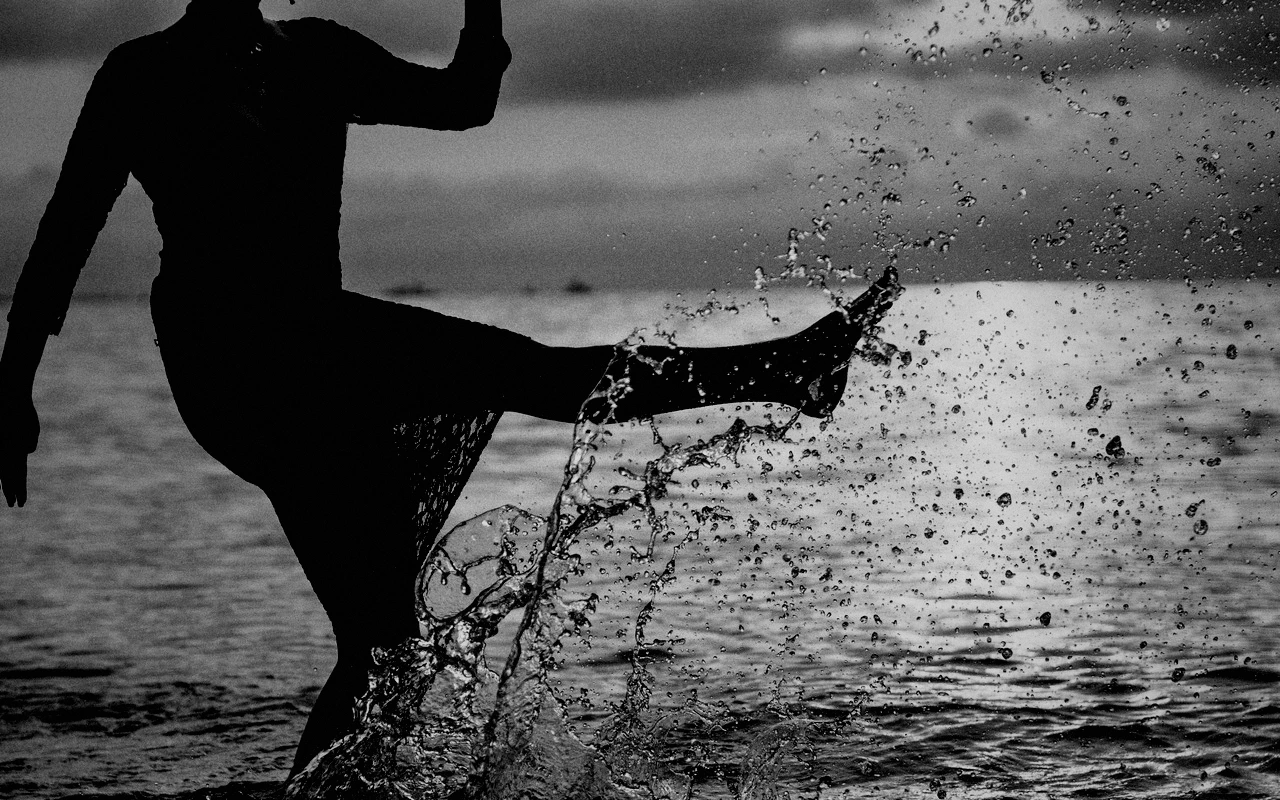
Dark Thriller begins by dropping exposure to -0.35, a slight underexposure that removes glare without burying the subject. Contrast climbs to 34, and shadows are cut harder still at -37, so the low end collapses into dense, heavy darkness. Highlights are held at -28, which keeps windows and practical sources from surging, while highlight rolloff at 26 softens the way those bright areas arrive. Temperature sits at -14, cool enough to read as night air, and a tint of +8 warms the neutrals faintly toward magenta, so the cold cast never looks sterile. Saturation at -25 drains the frame's color without going monochrome: skin stays readable, but fabric, paint and signage lose their pull. Faces keep their structure but give up their glow. Corners fall away under a vignette of 36, which presses attention toward the center, and grain at 18 gives the surface a visible, even texture. The result is a frame that feels sealed and airless rather than simply dark.
When to choose it
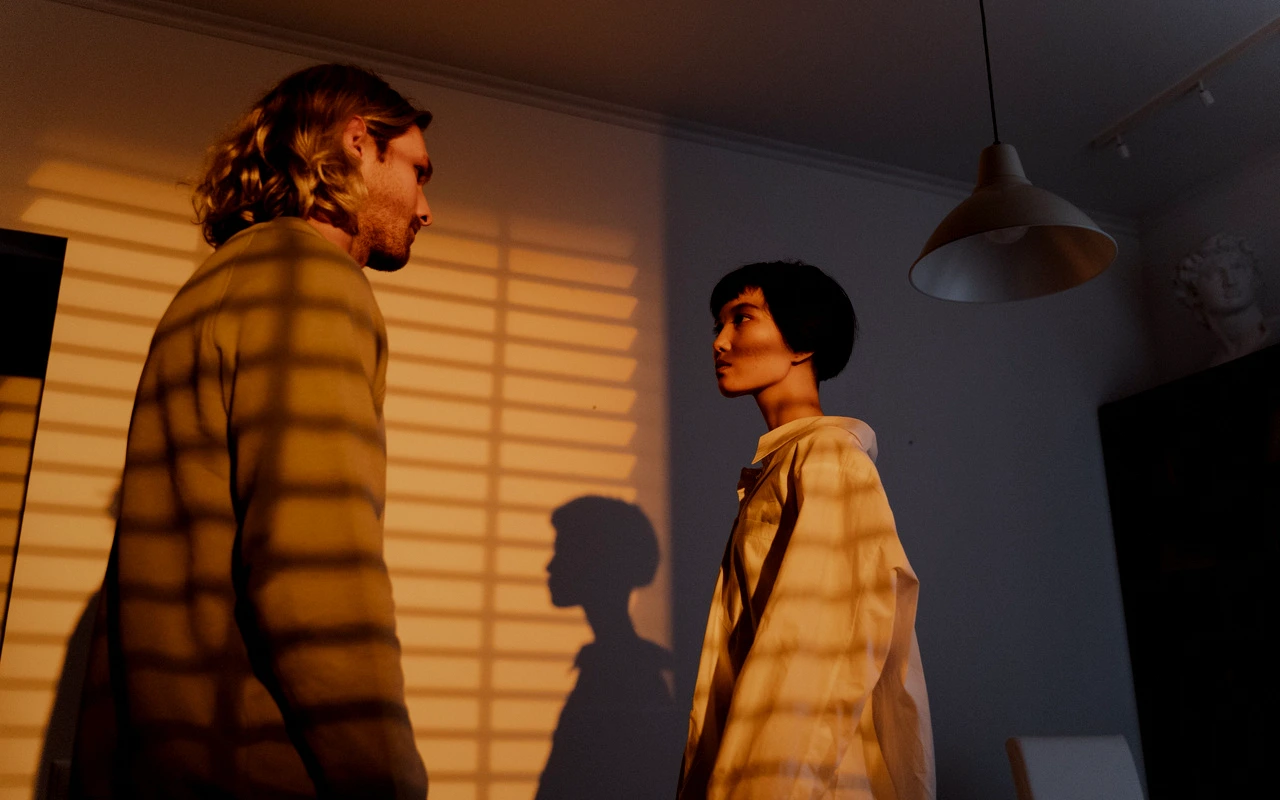
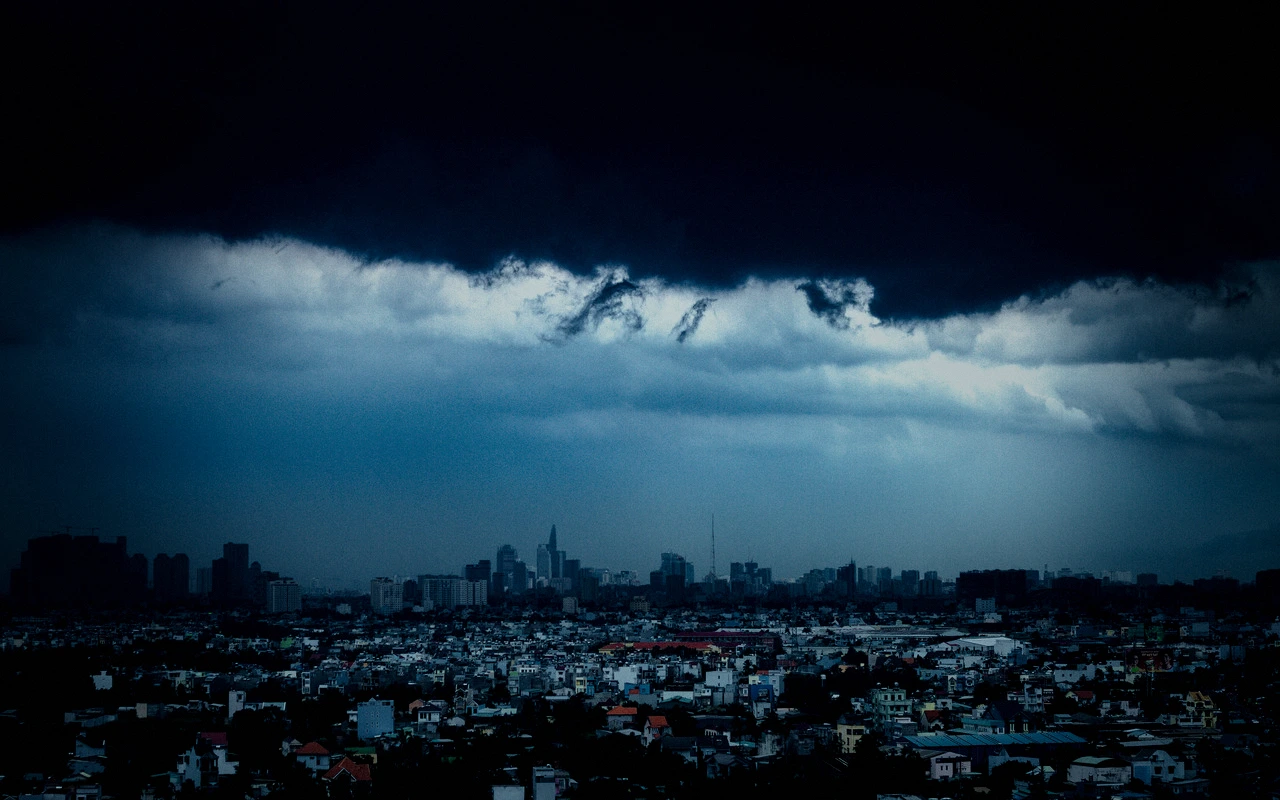
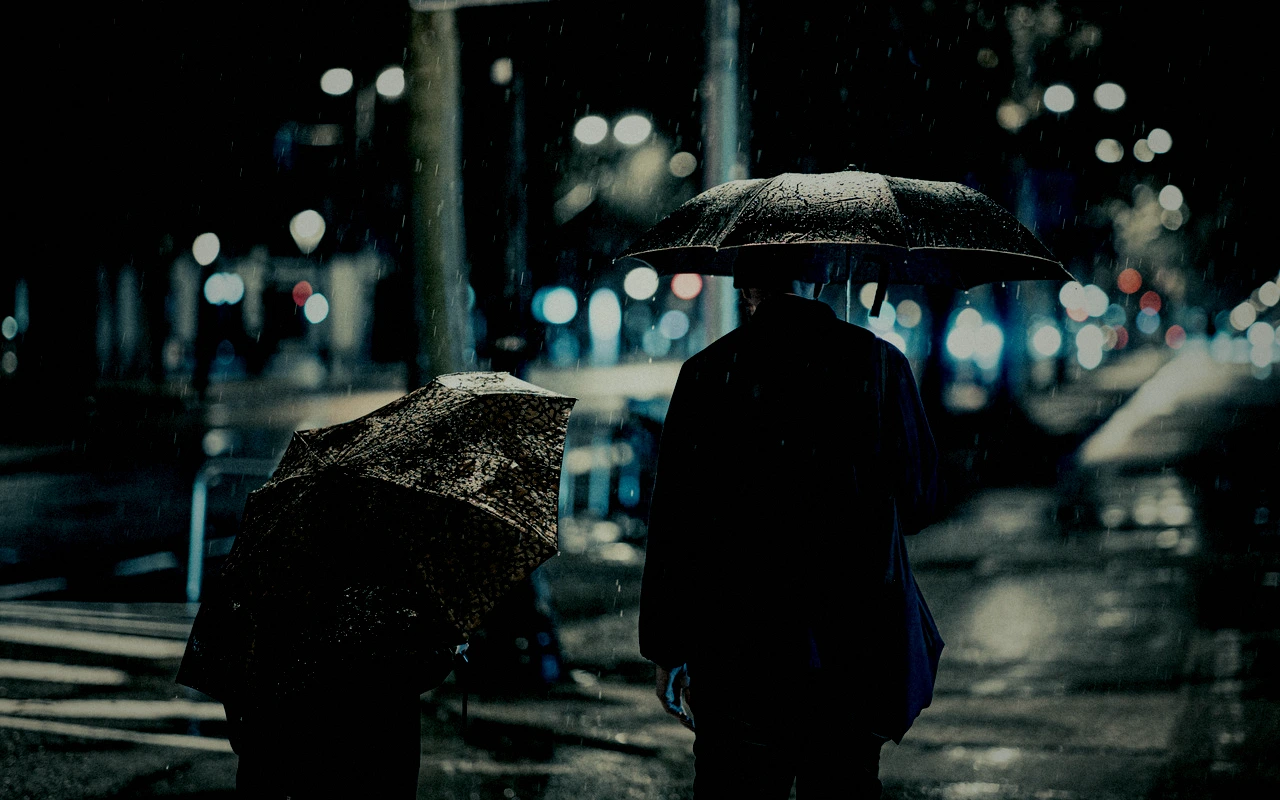
Dark Thriller suits scenes that already lean toward tension and want the frame closed in around them. Low-key interiors lit by a single window or a few practicals are its natural home, though the highlight control leaves room for a bright source inside the shot. Night exteriors, overcast daylight, warehouses, corridors and stairwells sit comfortably within its range. Because shadows fall so far at -37, dark clothing and unlit corners need a little separation light or they merge into one mass. Material with surface does well here: rain on glass, worn concrete, wool, leather, wet asphalt. Skin holds up under this saturation, so close work in mixed light remains workable, while open daylight scenes can feel heavier than intended. It is a genre setting rather than a general-purpose corrective.
Working with it in Studio
In CineLook Studio the Look loads as a starting grade, and the useful adjustments are small ones. Move Exposure in fine increments before touching Contrast; a dark transform is easier to judge one step at a time than after a large correction. When shadows have closed too far for a face or a doorway, lift Shadows instead of backing off Contrast, and leave Highlights near its set value so specular detail survives. Temperature and Tint work against the cool magenta bias, warming the frame or removing the flush. Saturation and Vibrance are there when the muted palette reads flat. Film Grain, Bloom and Vignette can be tuned in the app but are not written into a .cube LUT; only Exposure, Contrast, Highlights, Shadows, Temperature, Tint, Saturation, Vibrance and Highlight Rolloff travel with the export.
How it compares
Crime Scene is the nearer relative. At -0.22 exposure and -30 shadows it keeps more of the low end open than Dark Thriller's -37, and its contrast of 30 is gentler than 34. Saturation of -14 against -25 leaves it distinctly more colorful, and vibrance at 12 restores chroma through the midtones. Pick it when a procedural scene needs grit without the full atmospheric weight. Nordic Crime runs flatter and paler: contrast of 22, shadows at -24, exposure at -0.16, with temperature of -28 and saturation of -40. Take Nordic Crime for pale, overcast desolation; Dark Thriller for a frame that stays heavy and dim.
Where it fits in a grade
Dark Thriller is a genre look rather than a film emulation, so it holds no fixed place as a camera negative or a print stock, and there is no native balance or nominal speed to work around. That makes it the final statement in a grade: get exposure right, remove any strong cast, and land the image on a neutral base first, then apply the Look as the last creative decision before export. Doing it the other way around is the usual mistake, because once shadows are crushed and the cast is cool there is little room left for a correction to push against. Color work that needs precision belongs ahead of this step, not after it.
Transform parameters
Against a neutral starting point the CineLook Dark Thriller transform moves exposure -0.35, contrast +34, highlights -28, shadows -37, temperature -14, tint +8, saturation -25, film grain +18, vignette +36 and highlight rolloff +26.