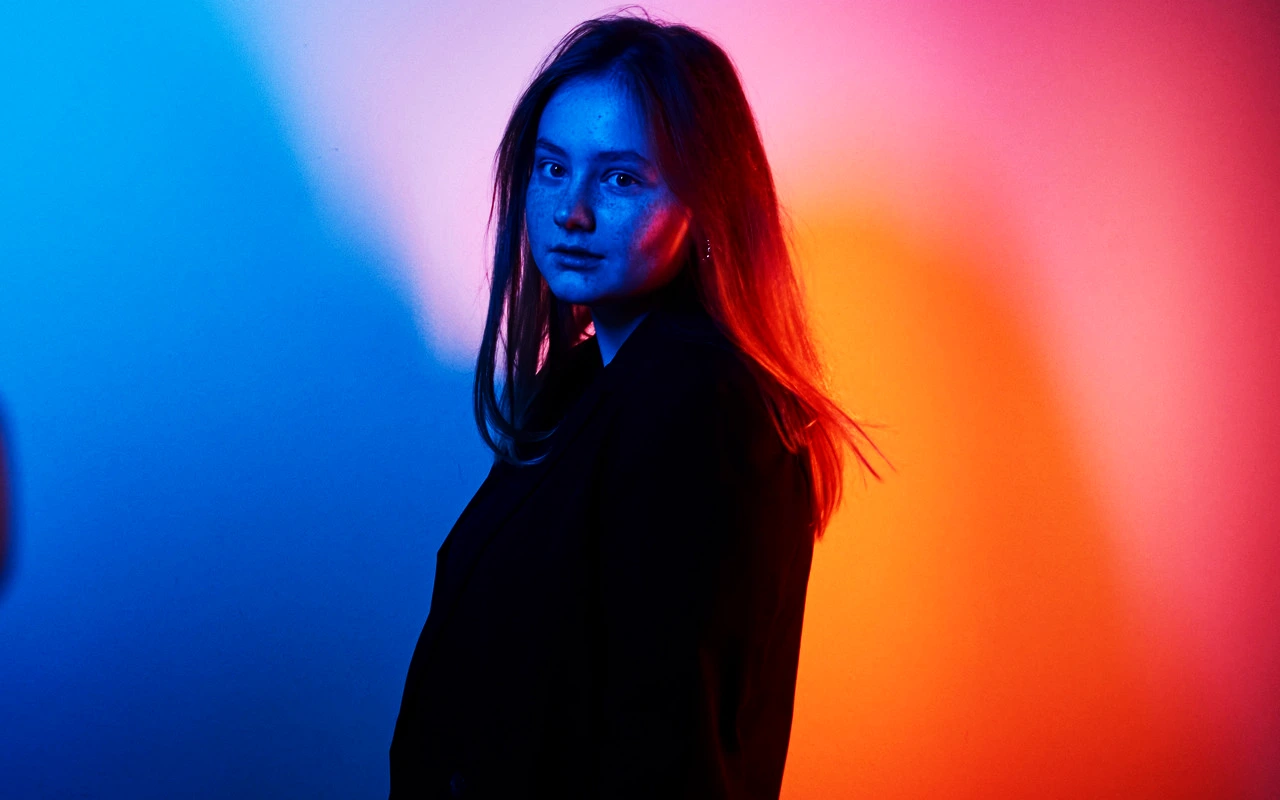
Fuji 3510 Print
CineLook release-print transform designed for open midtones, restrained cool-neutral density, clean cyan-green-blue separation, and smooth highlights.

Visual character
Open cool-neutral mids with clean cyan-blue separation
Best for
- Open-midtone theatrical finishing
- Cool-neutral environments
- Natural skin with cyan-blue separation
Lighting conditions
- Daylight-balanced masters
- Mixed cool production lighting
- Soft highlight scenes
Color character
The CineLook Fuji 3510 Print transform is a print-film finishing look built on a medium contrast profile and a shallow tone curve. The deltas are small: shadows sit 0.015 below the source, midtones 0.015 above it, and highlights 0.04 above it. Read together, they open the middle of the frame, hold the deepest values close to neutral, and let bright areas rise gently instead of snapping to white. The highlight response is soft, so speculars and window light keep their shape near the top end. Color stays restrained and cool-neutral in density, with clean cyan-green-blue separation through the mids, where blue and green read as distinct neighbors rather than one muddy field. Skin tone bias is neutral, which keeps faces from drifting pink or amber. Grain character is fine, adding a faint tooth to texture rather than visible structure. No matrix stage is involved; the curve carries the tonal adjustment and the color character follows from that restraint.
When to choose it
This transform fits material that already lives in cool-neutral territory. Daylight-balanced masters are its natural home, and mixed cool production lighting tends to settle into place rather than fight the grade. Scenes with soft highlights, where the top end is gentle to begin with, keep the most detail; the Look is not built to rescue blown practicals or hard midday sun. It suits open-midtone theatrical finishing, where the frame needs air in the middle without the density closing down. Natural skin holds up well, especially when faces sit against cyan-blue surroundings that need to stay separable. Interiors graded with it tend to feel even and quiet rather than dramatic. If a scene depends on heavy shadow separation or punchy warm contrast, a denser sibling will do the job more honestly.
Working with it in Studio
The Look loads as a starting point, not a locked recipe. Exposure and Contrast scale the whole curve, so small moves go a long way; easing Contrast down preserves the open midtones while the highlight lift reads as air instead of glare. Highlights and Shadows are the pair to reach for when the deltas clash with a shot: pulling Highlights back recovers the top end, and raising Shadows keeps neutral blacks from going gray. Temperature and Tint adjust the cool-neutral balance with little disturbance to the cyan-green-blue separation. Saturation and Vibrance suit a light hand; restraint is the point. Highlight Rolloff smooths the entry into the brightest values. Exposure, Contrast, Highlights, Shadows, Temperature, Tint, Saturation, Vibrance and Highlight Rolloff all carry into a .cube LUT export; Film Grain, Bloom and Vignette remain inside the app.
How it compares
Both siblings run high contrast, so the first difference is weight. Kodak 2393 Print pairs dense shadows with a neutral highlight response and vivid warm separation; pick it when the frame should carry mass low and color push warm. Fuji 3513 Print is dense at both ends, with a dense highlight response, firm red-magenta contrast and medium grain; it suits material that should feel packed. The CineLook Fuji 3510 Print transform stays medium in contrast, neutral in shadow and soft in highlight, holding open midtones the others close down. Choose 2393 for warm density, 3513 for red-magenta firmness, and 3510 when cool-neutral air and clean cyan-blue separation matter more.
Where it fits in a grade
Fuji 3510 Print is a finishing print rather than a camera negative, so it belongs near the end of the chain, after the image has been color corrected and ahead of any final texture pass. With no native balance or nominal speed attached, it does not establish an exposure or a white point the way a capture stock does; the frame should arrive already balanced and correctly exposed. Its medium contrast leaves room above and below, which makes a neutral base the natural partner rather than a look that has already spent the contrast. Fine grain and a soft highlight response keep the surface quiet and the top end calm, leaving room for texture applied later.
Transform parameters
The CineLook Fuji 3510 Print transform leaves every adjustment slider at its neutral value and carries the look in its colour transform instead. Its channel matrix keeps the 0.995 / 1.018 / 1.022 diagonal and mixes at most 0.028 of one channel into another, so hues stay close to their source while crosstalk stays controlled. The luma curve sits 0.04 above the linear ramp at three-quarter tone, which is where the shoulder starts to bend.